


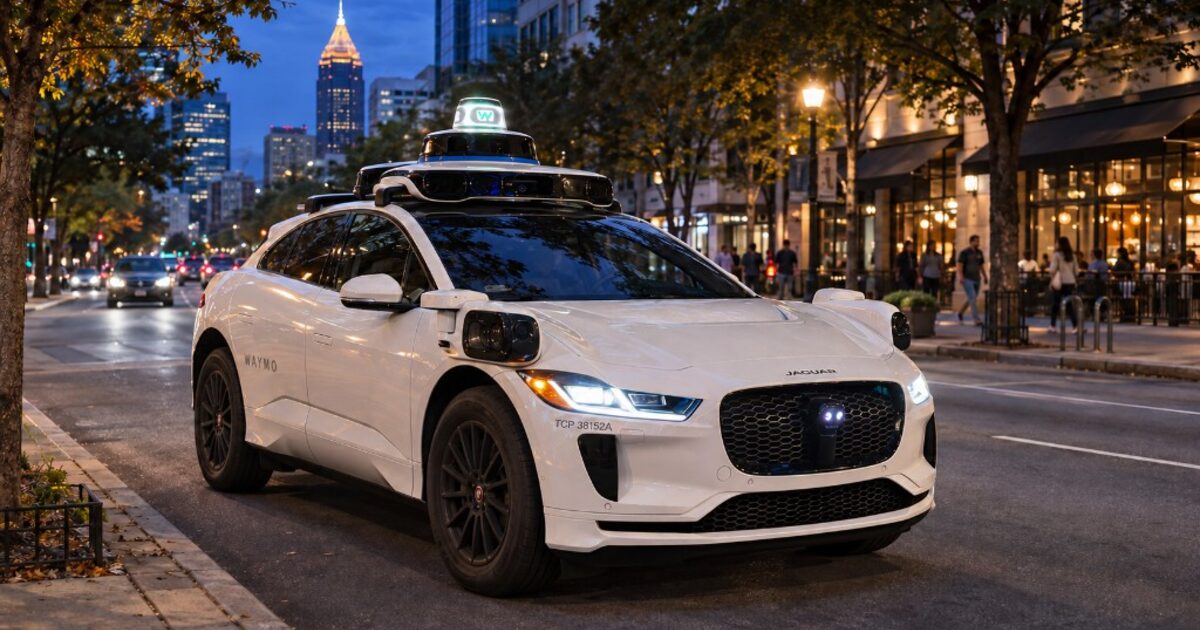
The first time I rode in a Waymo was after a red-eye flight home to Atlanta. It was early, I’d barely slept, and all I wanted was to get home and go to bed. I took MARTA from the airport into Midtown, climbed into a driverless car, and had a quiet ride home. It was great.
But the most interesting thing about Waymo isn't what it's like to ride in one. It's what it's like to live around them.
Atlanta is one of the first American cities where self-driving taxis have become part of everyday traffic. I regularly encounter Waymos while driving and walking around town. And I've come to a pretty straightforward conclusion: I'd much rather share the road with a Waymo than with the average Atlanta driver.
Waymos are extraordinarily conservative drivers. They're predictable, patient, and constantly monitoring their surroundings. They don't get distracted or decide that a yellow light is an invitation to accelerate. And none of this should be particularly surprising.
Waymo's vehicles use LiDAR, radar, and cameras to continuously build a picture of their surroundings. Combine this hardware with software designed to prioritize collision avoidance and cautious driving, and you get a vehicle that behaves very differently from the typical human driver.
Waymos still get into crashes, just far less often. In a study of about 50 million driverless miles across four metro areas, the Insurance Institute for Highway Safety found that Waymos were involved in 81% fewer injury crashes per mile than human drivers. In its own analysis, which includes Atlanta, Waymo reports 95% fewer crashes involving serious or fatal injuries per mile.
The benefit of Waymo isn't just riding in one. It's living with them.